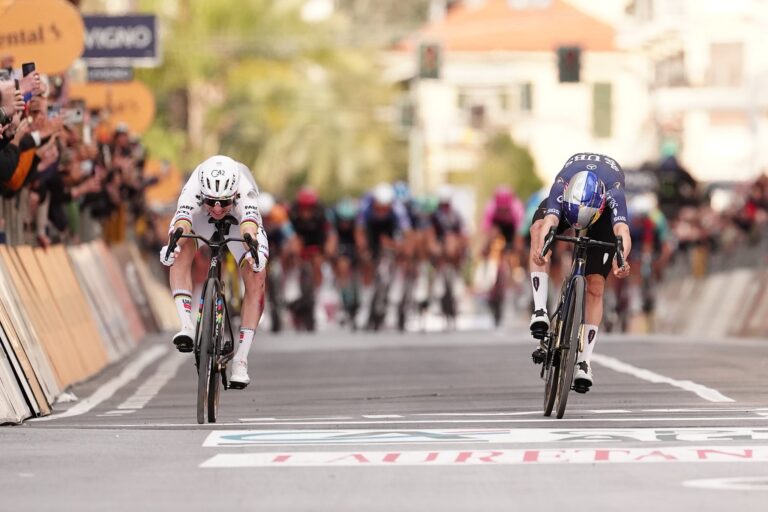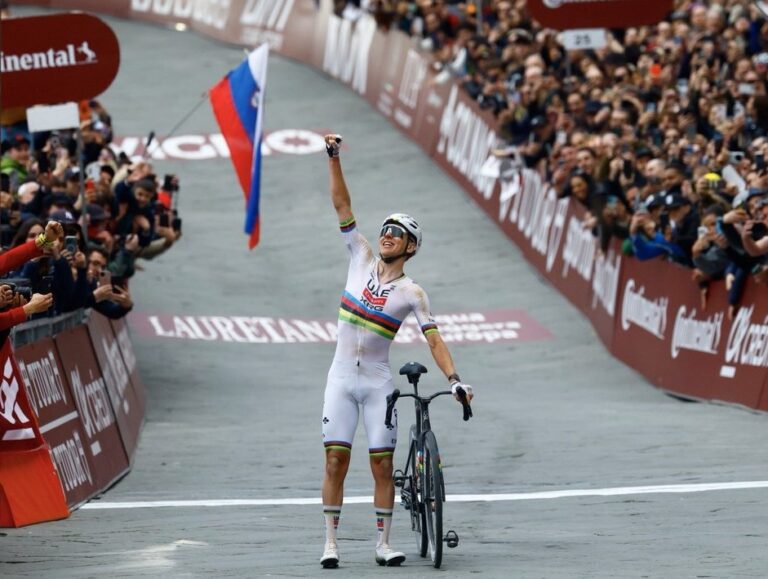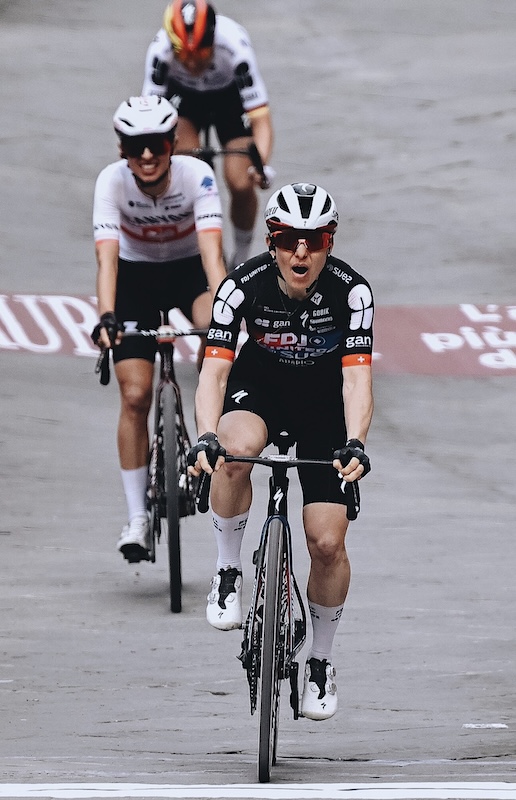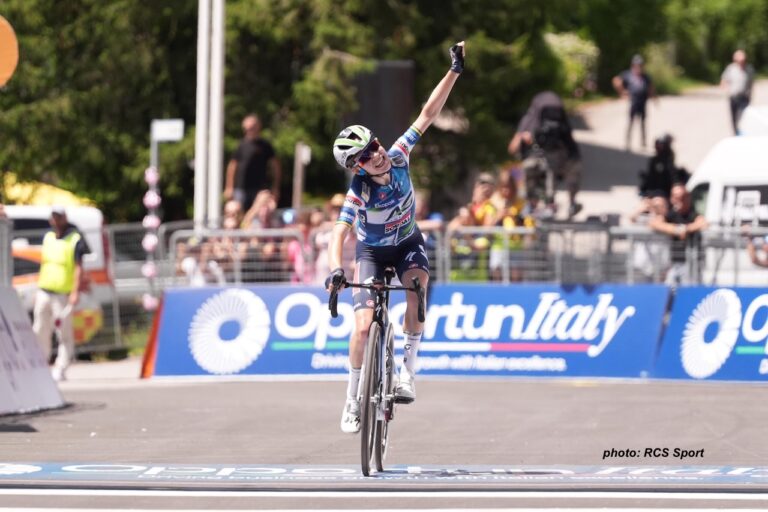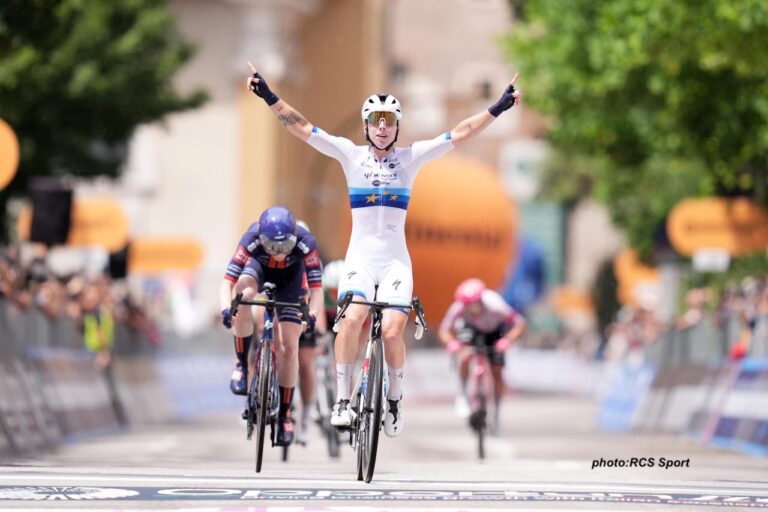
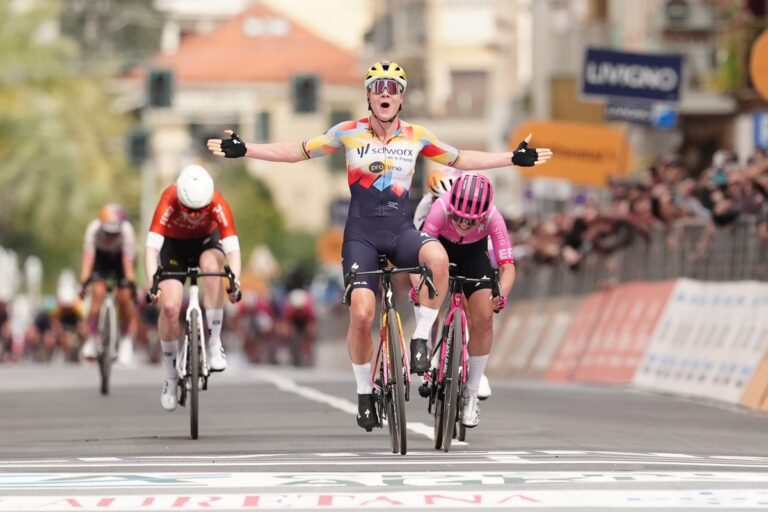
The 2026 edition of Milano–Sanremo Donne delivered a dramatic and selective finale over 156 km from Genoa to Sanremo, culminating in a reduced sprint on Via Roma. Belgian world champion Lotte Kopecky (SD Worx–Protime) claimed victory after a decisive late move on the Poggio.
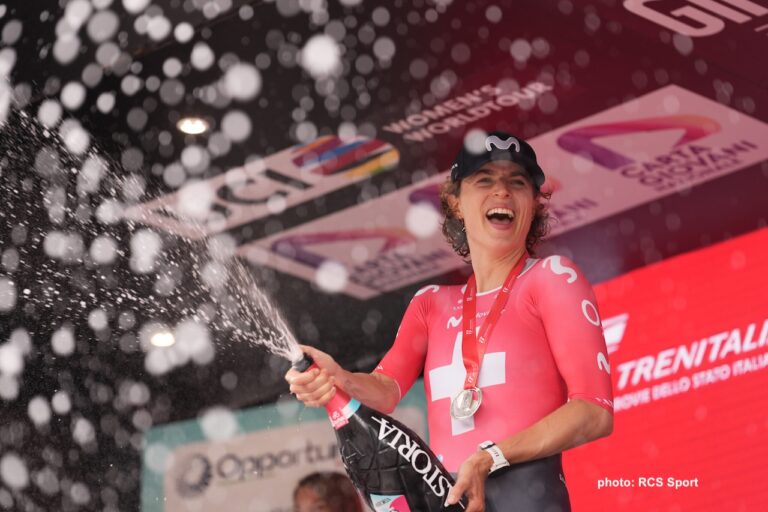
She finished ahead of Noemi Rüegg and Eleonora Gasparrini, capping a tactically perfect team performance.
Early Race: Breakaway Formation
The race began conservatively along the Ligurian coast, with the peloton controlling early moves. After roughly 35–40 km, an initial trio escaped before being joined by additional riders, forming a nine-rider breakaway.
This group built a maximum advantage of around four minutes, but the peloton—driven largely by SD Worx–Protime and other WorldTour teams—kept the gap under control in anticipation of the decisive climbs.
The breakaway was ultimately reeled in before the race reached the Cipressa, setting the stage for a classic Sanremo finale.
The Cipressa: Acceleration and Chaos
The race ignited on the Cipressa (5.6 km at ~4%), where repeated accelerations began to thin the peloton. Attacks from riders like Katarzyna Niewiadoma and Lieke Nooijen animated the front of the race and forced selections.
However, the descent proved decisive and dangerous. A major crash on the Cipressa descent disrupted the race, taking out several contenders, including Niewiadoma and others.
The incident fractured the peloton and removed key favourites, reshaping the tactical landscape heading into the Poggio.
The Poggio: Race-Defining Move
As expected, the decisive move came on the Poggio di Sanremo (3.7 km at ~3.7%).
- Puck Pieterse launched a strong attack near the climb’s upper slopes.
- Lotte Kopecky responded immediately, showing her intent.
- Noemi Rüegg, Eleonora Gasparrini, and Dominika Włodarczyk bridged across.
This five-rider group quickly established a small but crucial gap over the fragmented peloton. Despite attempts to reorganize behind, the chasing group hesitated—partly due to team tactics and fatigue after the crash and earlier efforts.
On the descent, Włodarczyk briefly attempted to go solo, but she was reeled back in before the flat run-in.
Final Kilometres: Cooperation and Tension
The leading quintet entered the final kilometres with only a slender advantage over the chasers.
Despite the small gap, cooperation held—each rider aware that hesitation would bring back the peloton, where fast finishers awaited.
Behind, Lorena Wiebes, the defending champion, led the sprint of the chasing group but could not close the gap, eventually finishing sixth.
The Sprint on Via Roma
The race came down to a five-up sprint on Via Roma.
Lotte Kopecky timed her effort perfectly, launching her sprint at around 200 meters to go. Noemi Rüegg tried to respond but could not come around, while Eleonora Gasparrini finished third after a slightly delayed sprint.
Kopecky crossed the line after 3h 47’17”, securing a landmark victory.
Results
Results powered by FirstCycling.com